
Grand County Criminal History Checks
A useful Grand County criminal history check begins with the kind of record needed. Utah Courts Xchange supplies public District and Justice Court case data. The Grand County Jail list addresses present county custody. The Utah Department of Corrections covers current state imprisonment and Adult Probation and Parole supervision. A person reviewing a fingerprint-linked Utah rap sheet uses the Bureau of Criminal Identification Right of Access process. Police reports remain with the agency that made them, so a Moab Police report and a Grand County Sheriff report require different forms.
Gather the full name, any prior name, a date range, the likely agency, and a case or incident number when known. A common name can return too many court matches. A tight date and Grand County or Moab court filter helps. When an entry matters, compare the booking allegation with the charge that was filed and the disposition on each count.
- Use Utah Courts Xchange for public District and Justice Court cases, narrowing the search to Grand County and the right court.
- Check the official county inmate list or call the jail when the question is present custody rather than case history.
- Send a focused request to the sheriff or Moab Police for an incident or arrest report held by that agency.
- Use UDC Offender Search for current state prison, probation, or parole status.
- Request a fingerprint-supported BCI Right of Access record when reviewing your own statewide Utah history.
Start with the official Grand County gateway when an office name is unclear. The county directory shows the local departments without turning distinct records into one search.
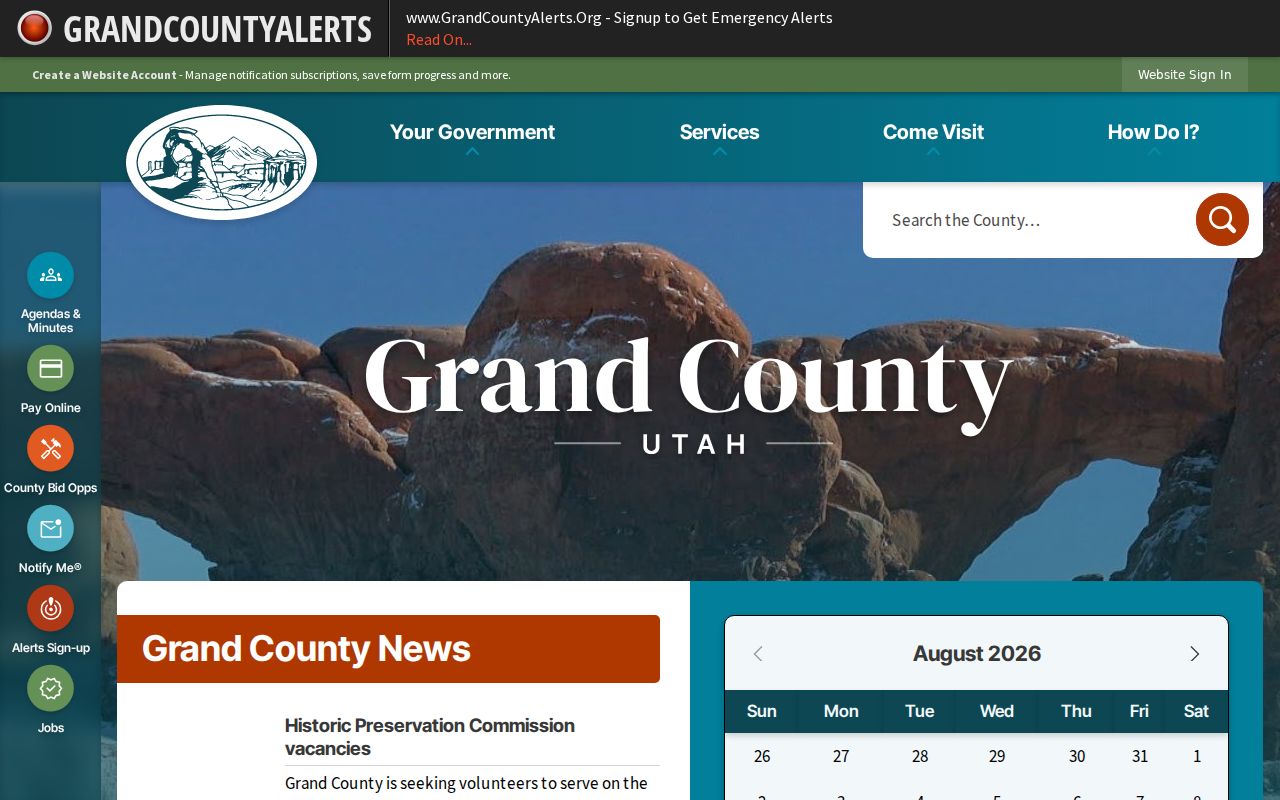
The county gateway is a routing tool. The actual record still comes from the sheriff, jail, clerk, court, or other named custodian.
No Single Grand County Criminal Search
A booking file, court docket, and BCI record answer different questions. Jail staff create the booking entry after intake. A prosecutor then decides whether to file charges and which charges to use. Court clerks record events and outcomes in CORIS, which feeds Xchange. BCI maintains submitted fingerprint-linked arrests and reported outcomes in the Utah Computerized Criminal History file. One source may change before another, and some events never belong in every layer.
The access channel should match the task. Use the sheriff or police agency for a Grand County narrative report, the jail for current custody, a court clerk for a certified disposition, BCI for your own statewide rap sheet, and the Utah registry for statutory public notice. The Grand County GRAMA portal handles general county records, but it tells users to route sheriff records to the Sheriff’s Office.
| Question | Grand County or Utah source | Main limit |
|---|---|---|
| What did an officer report? | Originating sheriff, police, UHP, or federal agency | Active, victim, juvenile, and protected details may be withheld |
| Is someone in county custody now? | Grand County Jail list or jail phone | Release or transfer can remove a current listing |
| What was filed and decided? | Xchange and the appropriate court clerk | Sealed, expunged, juvenile, and other nonpublic matters are excluded |
| What does my Utah rap sheet show? | BCI Right of Access | Subject-only, fingerprint-supported process |
Official Background Checks in Utah
Utah has no general public name search for another person’s statewide rap sheet. The official self-review product is the Utah Department of Public Safety, Bureau of Criminal Identification Right of Access process. The applicant completes the current form, supplies valid government photo identification, and provides fingerprints taken by an authorized law-enforcement official. BCI charges $20 for Right of Access as of July 1, 2025. The same agency maintains the UCCH repository and accepts challenges when a subject finds an error.
The current application includes names, date of birth, past names, mailing and physical addresses, a signed declaration, fingerprint blocks, the print-taking official’s details, payment, and an identification copy for a mailed filing. Fingerprints may be placed on the form or supplied on a ten-print card. Grand County residents should call before relying on Moab Police for prints. Utah’s approved-site list marked its listed service unavailable in September 2025 because of equipment trouble.
The BCI criminal-record page shows the official self-review route and current instructions.
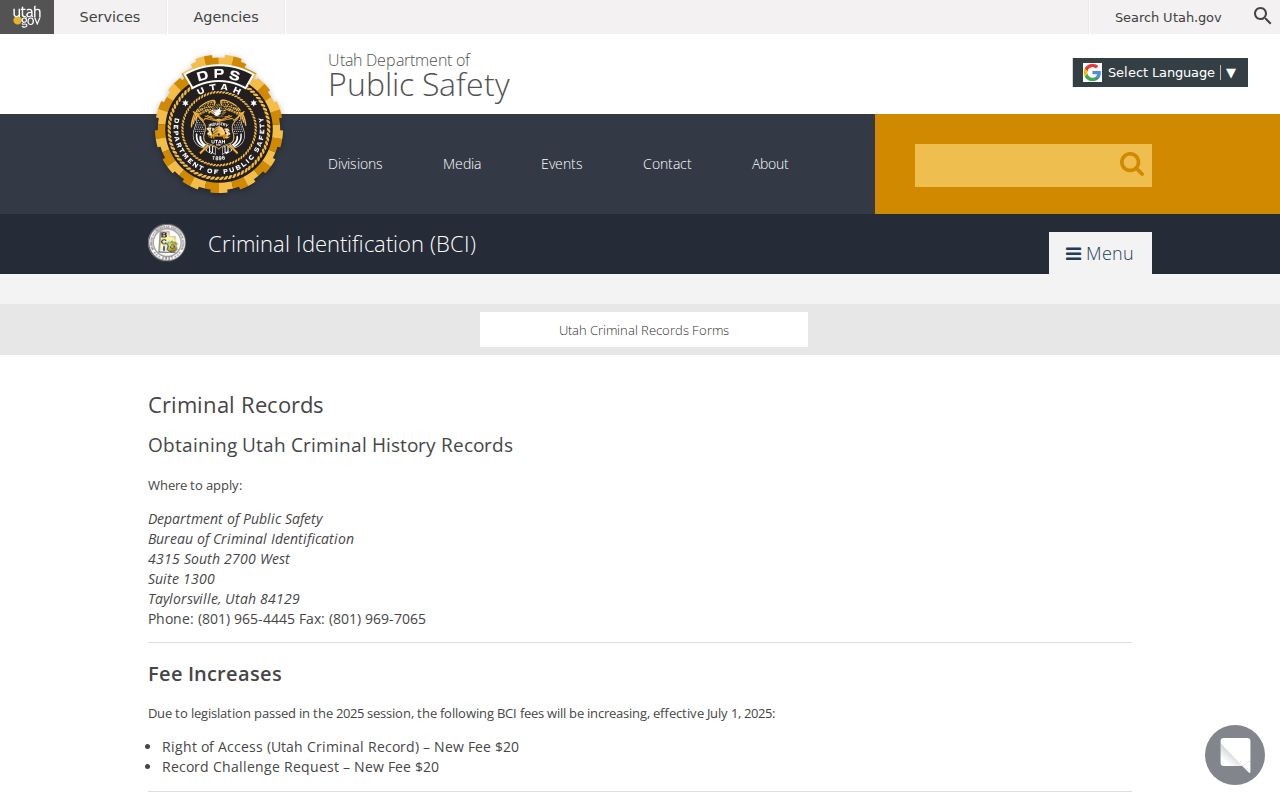
This BCI channel is for the record subject. It should not be confused with a public court case search through Xchange.
Grand County BCI Criminal Records
BCI’s authority reaches beyond Grand County court files. The bureau enters, updates, and maintains fingerprint-supported criminal arrests and outcomes submitted to UCCH. That statewide scope is useful for self-review, yet BCI warns that histories can be incomplete. Delayed dispositions, amended charges, and entries that lack qualifying fingerprint support can create gaps. A clean BCI response is therefore not a substitute for checking a known court case or correcting an originating record.
BCI also provides a formal challenge path. If a Utah record is wrong, compare it with the certified Grand County disposition and contact BCI with the material its process requests. A court-data error should first go to the clerk that owns the case. An incident-report error belongs with the agency that created the report.
The official BCI authority page describes its UCCH work and record-challenge duties.
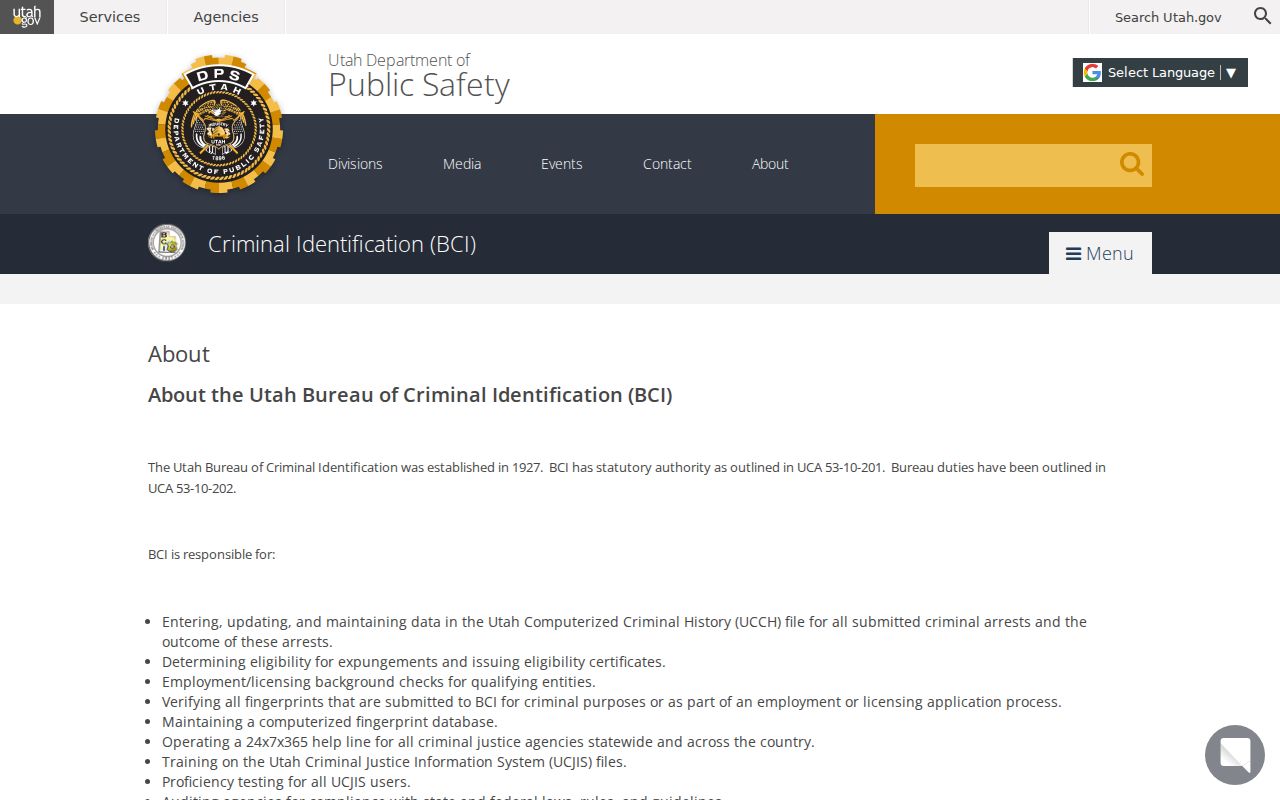
That division of responsibility matters. BCI can address the repository record, while Grand County clerks and agencies correct their own source documents.
Kinds of Criminal Records
Grand County criminal records form a chain, not a single report. An incident file describes an agency response. A booking record documents intake and custody. The charging record shows the prosecutor’s decision. The court file tracks pleas, orders, disposition, and sentence. BCI’s UCCH file links submitted arrests and reported outcomes by fingerprint. Corrections and registry systems have narrower public purposes.
The office that created a record normally controls access to it. This is why asking the court clerk for a police narrative, or asking the Clerk/Auditor for a sheriff report, sends the request to the wrong desk.
- Incident and arrest reports: held by the Grand County Sheriff, Moab Police, UHP, NPS, or another originating agency.
- Booking and custody records: created by Grand County Jail during intake and updated through release or transfer.
- Court case files: kept by Seventh District Court or Grand County Justice Court based on the charge class and venue.
- State history and corrections entries: maintained by BCI and UDC for their distinct statutory functions.
- Registry records: published by Utah DPS for people with qualifying sex, kidnap, or child-abuse registration duties.
Grand County Criminal Records Hub
Grand County’s records geography is compact but legally split. The county complex at 125 E. Center Street in Moab houses the Seventh District, Seventh District Juvenile, and Grand County Justice Courts. The jail also uses that address for inmate mail. Sheriff administration sits nearby at 25 S. 100 E., while Moab Police and City Hall are at 217 E. Center Street. Walking to the right block does not ensure arrival at the right counter.
District Court clerks maintain felony and class A misdemeanor files. The Justice Court clerk handles class B and C misdemeanor and infraction matters outside Moab. The Clerk/Auditor receives general county GRAMA requests. Sheriff reports go directly to the Sheriff’s Office. Moab Police controls reports created by city officers.
Grand County Courts
125 E. Center St.
Moab, UT 84532
District: 435-259-1349
Justice: 435-259-1334
Sheriff Administration
25 S. 100 E.
Moab, UT 84532
435-259-8115
Monday through Friday, 8 a.m. to 5 p.m.
Clerk/Auditor
125 E. Center St.
Moab, UT 84532
435-259-1321
clerk@grandcountyutah.net
Grand County Criminal Records: What They Contain
Content depends on the record layer. A BCI record emphasizes identity, fingerprint basis, arrest cycles, agencies, charges, and reported results. A court file emphasizes case number, court, parties, counts, events, hearings, outcome, sentence, and financial entries. A booking file is built around intake, agency, custody, allegations, bond or holds, and release. Public versions remove or restrict sensitive facts.
| Name and identifiers | Names, aliases, date of birth, and fingerprint or state identifiers where that record is authorized to display them. |
|---|---|
| Arrest and booking | Agency, incident or booking number, intake time, alleged charges, custody basis, bond or holds, and release or transfer data. |
| Charges and statutes | Each alleged or filed count, its Utah offense class, and changes made before final disposition. |
| Disposition | The result of each count, such as conviction, acquittal, dismissal, or another court resolution. |
| Sentence | Custody, probation, fines, restitution, and other terms imposed after a conviction. |
| Supervision | Current UDC incarceration, probation, or parole information that the public offender search is allowed to show. |
Protected identifiers, victim and juvenile details, medical facts, active-investigation material, and sealed or expunged records do not belong in an ordinary public view.
Grand County Booking Records Need Context
A Grand County booking charge records the stated basis for custody at intake. It does not prove that the Grand County Attorney filed that count. Prosecutors can decline, amend, add, or reduce charges after reviewing reports. A filed charge also does not prove guilt. The Grand County court’s final disposition supplies the result, count by count.
For recent custody, use the county list and then the fuller Grand County arrest search routes if the person has been released or transferred. For a charge outcome, look for the matching court number in Xchange and obtain a certified disposition from the correct clerk when an official copy is needed.
- Booking charge
- The allegation recorded when jail staff accept a person into custody.
- Information
- The formal charging document filed by a prosecutor.
- Disposition
- The court result for a charge or case.
- Bench warrant
- A court-issued warrant often tied to failure to appear or comply.
Grand County Warrant Search Fallbacks
Grand County has no verified public warrant database or official law-enforcement app. Start with the court that may have issued the warrant. Seventh District Court handles felony and class A matters, while Grand County Justice Court handles lower county cases outside Moab. Xchange may show a public warrant event on the docket, but sealed warrants and operational law-enforcement databases are not public. A missing online event does not prove that no warrant exists.
Call the likely court, then contact the Grand County Sheriff at 435-259-8115 if the docket is unclear. A focused GRAMA request can ask for releasable warrant information, though active or sealed material may be withheld. Public systems can also lag after a warrant is cleared. Anyone resolving their own Grand County warrant should confirm status with the issuing court or law enforcement and seek legal advice before appearing. Use 911 only for an immediate emergency, never for a records inquiry.
Utah Public Access Laws
Utah law assigns different access rules to agency records, court records, BCI histories, expunged matters, and registry profiles. GRAMA creates a way to ask a government office for its records, but it does not make every document public. Utah court rules govern Xchange classifications. BCI dissemination law limits access to UCCH data while allowing a person to inspect and challenge their own record.
Key Utah laws:
Utah Code §63G-2-202 sets the GRAMA request and proof-of-access process.
Utah Code §53-10-108 limits criminal-history dissemination and gives a person access to and a challenge path for their own record.
Utah court record rules keep private, sealed, expunged, juvenile, and specified case types out of public Xchange results.
Utah Code §77-40a-403 protects expunged records and allows access only in limited authorized settings.
A denial or redaction should identify the record classification and the appeal route. Ask the custodian to explain both.
Grand County Criminal Records by GRAMA
The Grand County Sheriff Forms and Documents page serves as its public records desk. A Grand County request should give the incident dates, case number if known, a clear description, contact information, access basis, signature, and legible photo identification. The sheriff generally limits requests to the subject or the legal guardian of a listed minor. Grand County reports ordinarily are not released until adjudication and court processing are complete.
GRAMA is not a substitute for discovery in a pending Grand County case. The sheriff directs an unrepresented defendant to the Prosecuting Attorney for discovery, while counsel requests it for a represented defendant. Utah law generally permits ten working days for a response. The five-day expedited route requires the statutory basis and a written reason.
The county open-records page shows the online and Clerk/Auditor routes.
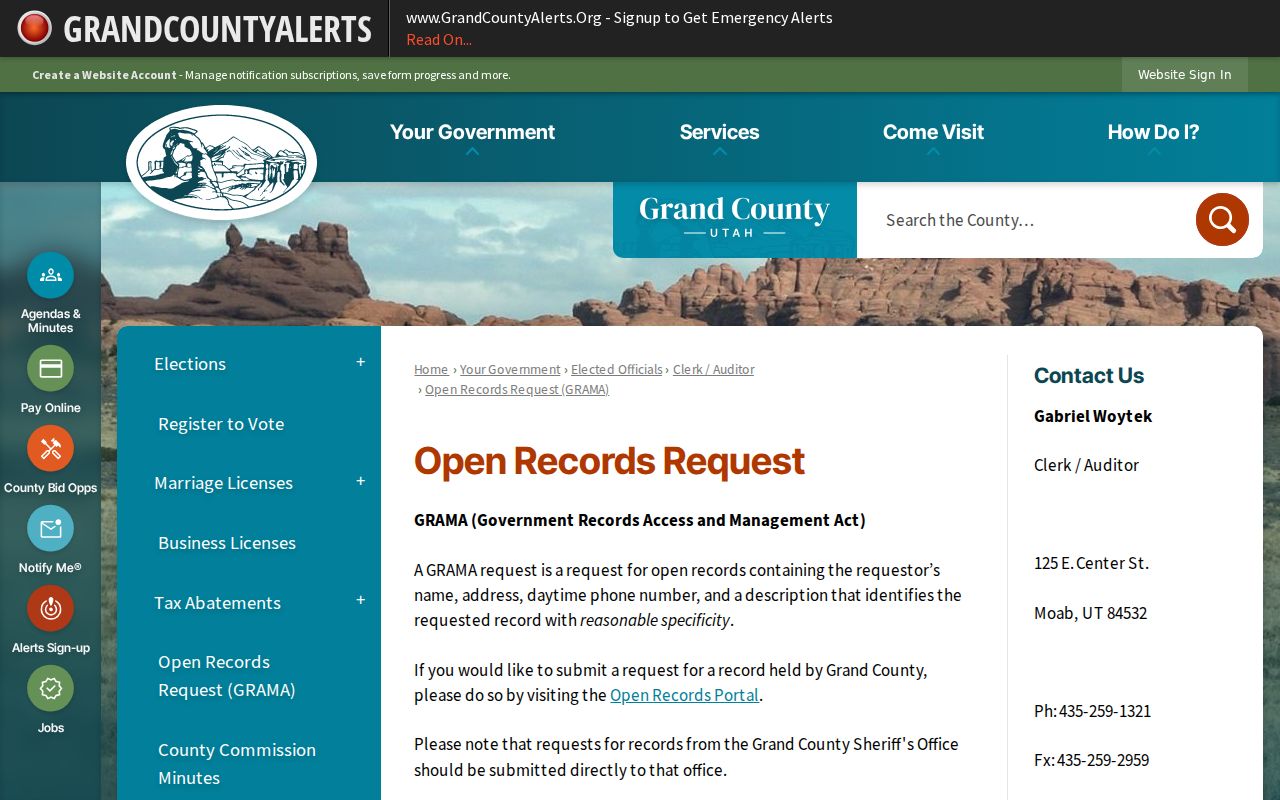
The general portal is best for county administrative records. Send sheriff-held criminal records through the sheriff’s own form and contact.
Restricted, Sealed & Expunged Records
Expungement in Utah seals qualifying government records. Ordinary viewers can no longer see an expunged court matter through Xchange, and most agencies answer as though the event did not occur. The process does not erase news stories or force every private publisher to remove old material. A person’s MyCourtCase view may show the neutral label “State of Utah vs. Case Expunged.”
Other gaps are expected. Juvenile cases are excluded from public Xchange. Private and sealed cases stay out. Active investigations, protected personal details, victim information, and controlled records can be withheld under the law that applies to the custodian. No result should be read as proof that no event ever existed.
BCI access law is shown in the official Utah criminal-history statute.
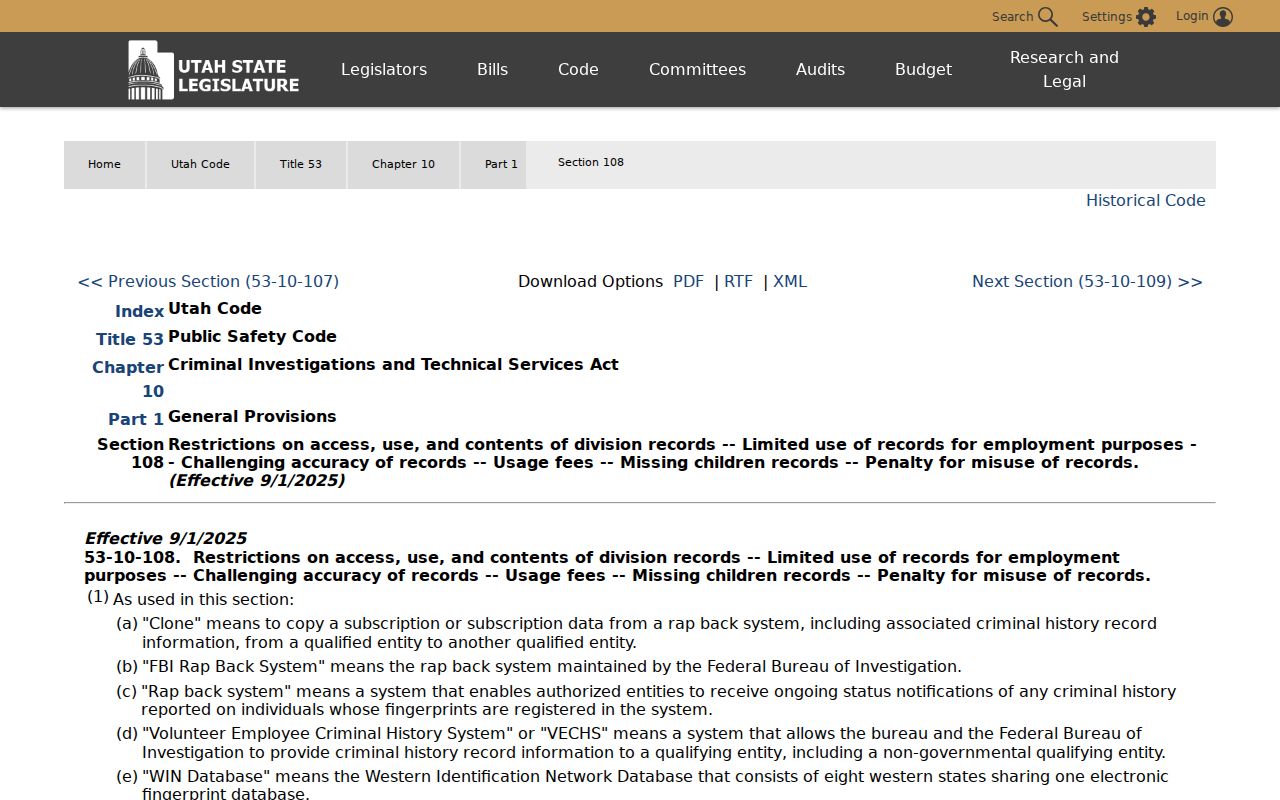
The statute draws a firm line between a subject’s own record review and public access to another person’s statewide rap sheet.
Grand County Criminal Records After 2026
Utah changed its automatic expungement process on January 1, 2026. Utah Courts now identifies qualifying automatic cases without requiring a defendant to start the process with an application. Petition-based relief still depends on the case result, offense, conviction count, waiting period, sentence completion, and qualifying obligations. A Grand County petition belongs in the Moab court that handled the case.
After a Grand County order, courts and BCI notify affected government agencies through the statutory process. Utah Courts advises obtaining certified copies of a recent Grand County order promptly. A request made within 28 days can obtain certified copies for a fee. When a public government source still displays the case, take the order to the clerk or BCI that controls that source.
Use the current Utah Courts expungement instructions instead of relying on a short eligibility summary. Grand County-specific filing charges were not confirmed in the official research, so the Moab clerk should verify the current amount.
Grand County Supervision Criminal Records
Adult probation and parole in Grand County are state-run. Utah Department of Corrections Adult Probation and Parole Region 6 serves Grand and San Juan Counties from Moab. The Utah Board of Pardons and Parole makes state-prison parole release decisions, while AP&P supervises people in the community. UDC Offender Search accepts a name or UDC number for people currently incarcerated by UDC or under probation or parole supervision.
The Utah Department of Corrections gateway leads to offender-search and custody resources.
Use that state search after a transfer from Grand County Jail or when the court sentence points to state custody or supervision.
The UDC probation and parole page explains AP&P and Region 6 coverage.
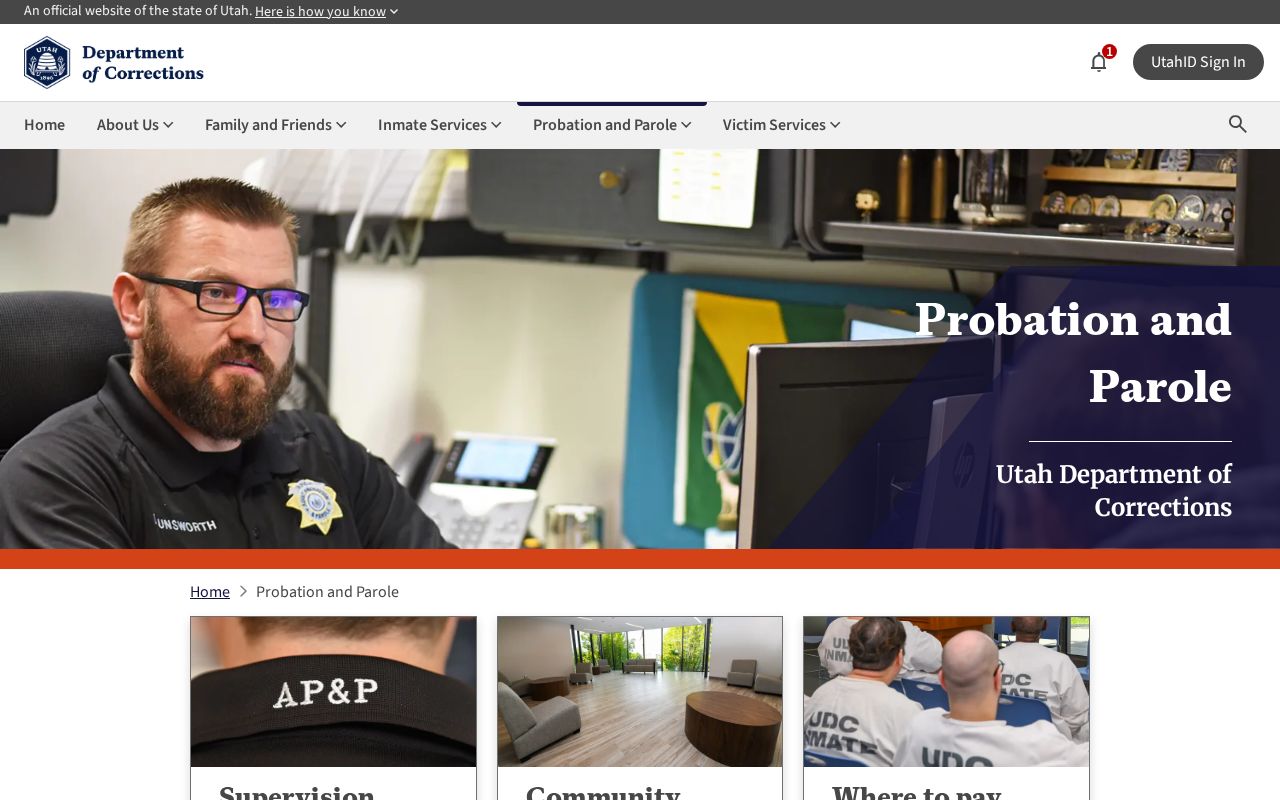
Detailed officer notes, treatment data, risk material, and supervision files are not the same as a public court docket and may be protected.
Grand County Criminal Records Context
Grand County had an estimated 9,790 residents on July 1, 2025 across 3,672.74 square miles. That rural Grand County scale makes agency jurisdiction a key search field. The Sheriff handles much of the unincorporated county. Moab Police handles city incidents. Utah Highway Patrol works state roads, and National Park Service officers handle federal park events. A Moab mailing address does not establish which Grand County agency wrote the report.
The Census QuickFacts profile supplies the population and land-area context.
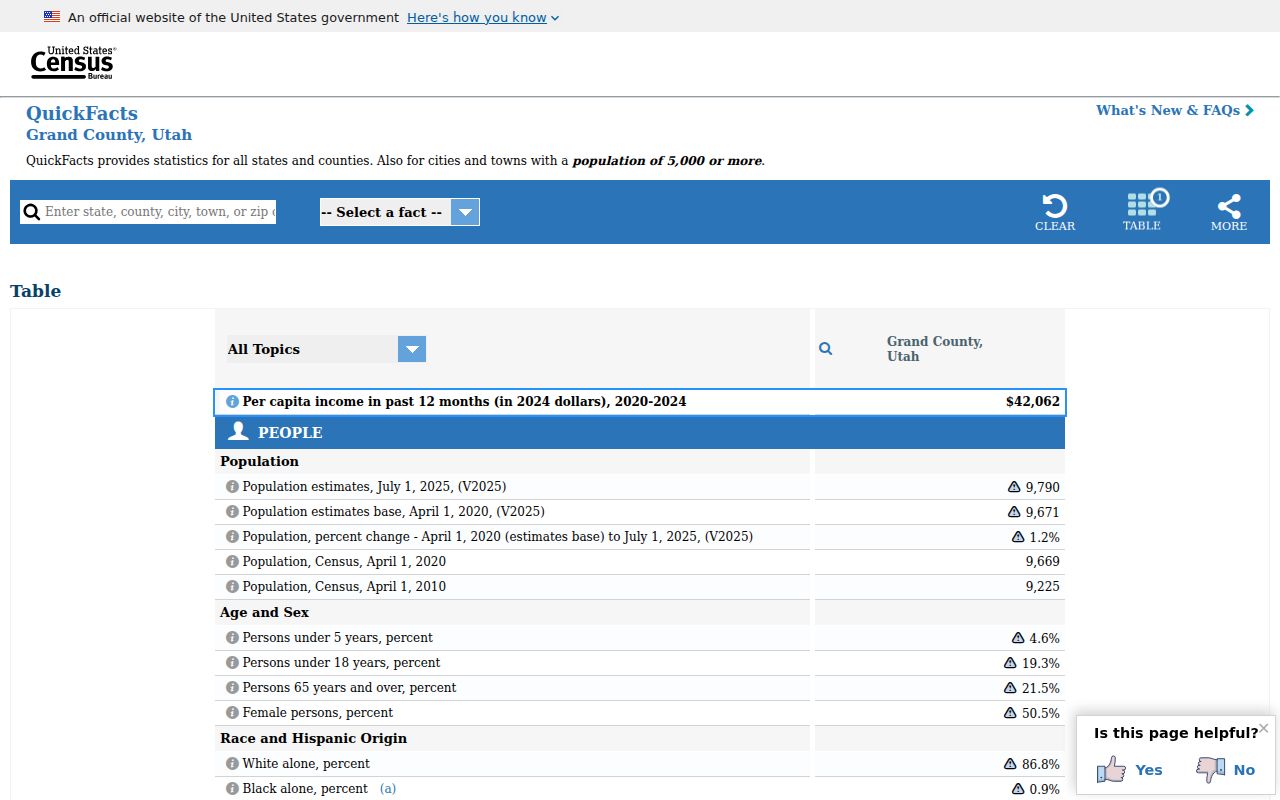
Those figures should not be treated as crime predictors. They explain why county, city, highway, and federal-land records can follow different paths.
The Utah Department of Public Safety gateway connects official state crime, GRAMA, registry, and public-safety resources.

Agency and year filters must be checked before citing a count. No defensible Grand County offense trend was available in the supplied official research.
City-by-City Criminal Records in Grand County
Grand County has two incorporated places. Moab maintains a police department and a city police records form, while Castle Valley relies on the Grand County Sheriff for criminal incident and arrest records. Both communities route county bookings to Grand County Jail and public court searches through Utah Courts Xchange. City and town guides keep those local starting points clear.
Moab Record Check
Population 5,366 in the 2020 Census. Moab Police has its own records request channel.
Castle Valley Record Check
Population 347 in the 2020 Census. Sheriff and county court routes replace a town police desk.